Wildlife
Where to See Red Grouse, Curlews, and Hen Harriers: Ethical Wildlife Watching on Moorland
Moorland in spring is a place of big skies and thin soil. A red grouse breaks from heather with a rattle of wings. Somewhere above, a curlew bubbles and climbs. If you are lucky, a hen harrier quarters the slope, low and deliberate. These encounters stay with you. They also cost the birds energy. On a cold, wet moor, every flush and every alarm call takes something away from feeding, nesting, or raising young. Watching well is not about getting close. It is about timing, patience, and knowing when to back off.
The First Rule: Let the Birds Decide the Distance
Ethical wildlife watching on moorland starts with a simple test. If a bird changes what it is doing because of you, you are too close. A curlew that stops feeding and starts calling is telling you to move away. A grouse that flushes is already losing energy. A hen harrier that veers off its line may be leaving a nest or a food pass.
Use optics. A decent pair of 8x42 binoculars or a lightweight scope will show you more than any approach. Stay on public paths and rights of way. Check local access rules before you go, because they differ across England, Scotland, and Wales. Keep dogs on a short lead, or leave them at home. Never use playback to pull a bird closer. And do not post exact nest locations online, however exciting the find feels.
Red Grouse: Heather Specialists
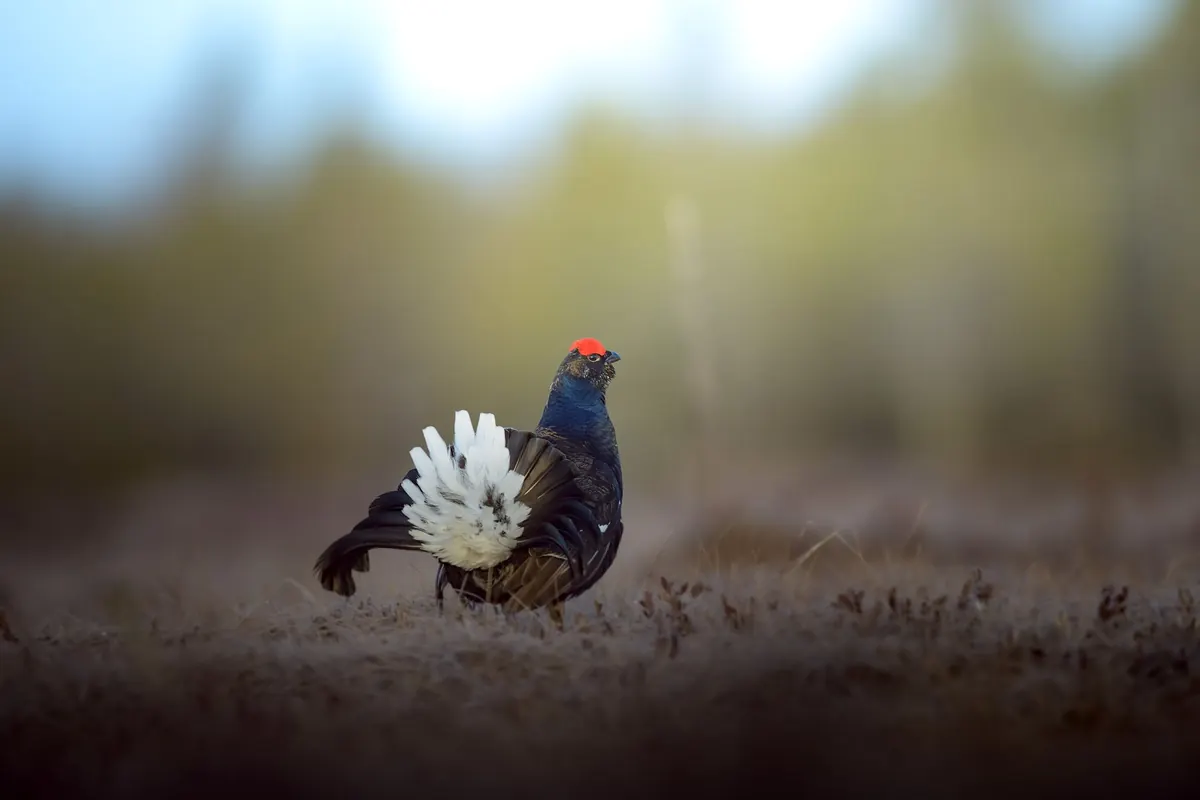
Red grouse are with us all year. They live on heather moorland, often on the edges of gritstone or limestone moors where the heather is young and mixed with cotton grass. In spring, males call from low mounds and fence posts. The sound is a hard, carrying go-back, go-back. In late summer and autumn, family groups—coveys—feed together on the ling.
Timing: early morning and the last two hours before dusk are best. Midday birds sit tight and are easy to miss. Weather matters. Calm, dry days after rain often produce more activity than bright, windy ones.
Fieldcraft: grouse are wary and fast. Scan with binoculars from a distance. Look for a red-brown shape on the skyline or a low, direct flight with whirring wings. If you flush one, stop. Do not follow. Note the direction and move on quietly. Avoid walking through dense heather in spring and early summer, when nests and chicks are hidden under the stems.
Curlews: The Sound of Spring
Curlews return to moorland breeding grounds from late February onwards, depending on the weather and latitude. The first sign is usually the call—a rising, bubbling cur-lee that carries across the valley. Display flights peak from March to May. Males climb, hover, and glide down with trembling wings, calling all the way.
They nest in rough grass, rushy pasture, and open moorland, often well away from paths. The nest is a scrape on the ground, and the eggs and chicks are almost impossible to see. That is why disturbance is so damaging. A dog off the lead, a walker cutting a corner, or a photographer creeping closer can cause a pair to abandon a clutch or leave chicks exposed to crows and foxes.
Watch curlews from a track or a gateway. Use a scope. If a bird starts alarm calling, circling overhead, or pretending to have a broken wing, you are too close. Back away the way you came. Do not use playback. Curlews are red-listed and have suffered serious declines, so every quiet observation matters.
Hen Harriers: Patience, Distance, and Luck
Hen harriers are one of the most thrilling moorland birds, and one of the most sensitive. They are specially protected by law in the UK, which means it is an offence to disturb them at or near a nest. That is not just a rule to follow. It is a reason to keep your distance even when you think no one is watching.
Spring and early summer are the best times to see them. Males perform sky-dancing displays—steep climbs, rolls, and dives—over the moor. Females and young birds hunt low, quartering the heather with a buoyant, tilting flight. A male is pale grey with black wingtips; a female is brown with a white rump. Both show a long tail and a distinctive five-fingered wingtip.
Winter offers another chance. Hen harriers gather at communal roosts on moorland and coastal marshes. Arrive well before dusk, stay in your car or a hide, and watch the horizon. Do not walk in to flush the birds. A roost that is disturbed may break up, leaving birds to face a cold night with less energy.
If you find a harrier nest, do not approach. Leave quietly and report it to the local raptor study group or the relevant conservation body. Never share the location on social media.
A Practical Code for Moorland Watching
These habits will keep you and the birds safe, and they work on any moor.
- Keep a generous distance. If the bird changes behaviour, stop and retreat.
- Stay on public rights of way and marked paths. Do not cut across rough grass or heather.
- Use binoculars or a scope. They see more and disturb less.
- No playback, no imitation calls, no baiting.
- Keep dogs on a short lead or leave them behind. Ground-nesting birds have no defense against a curious dog.
- Do not share exact locations of nests, roosts, or rare sightings.
- Take all litter home. No fires, no cigarettes, no trampling of vegetation.
- If you see a distressed bird or a chick, leave it alone. Contact a licensed wildlife rehabilitator or the landowner if there is a clear problem.
Timing Your Visit
Moorland birding follows a rhythm. In March and April, curlews display and harriers sky-dance. May and June are for nesting and feeding young—watch from a distance and keep to paths. July and August bring post-breeding flocks and red grouse coveys. September and October are good for harrier passage and grouse family groups. Winter is for harrier roosts and hardy moorland residents.
Dawn and dusk are almost always best. Light is softer, birds are more active, and there are fewer people about. Wind and rain suppress activity; a calm, dry day after a front has passed is worth planning around. Always check the weather and bring layers. Moorland can be cold even in June.
Before You Go: A Short Checklist
Pack binoculars or a scope, a map, water, and warm waterproof clothing. Check access rights and any seasonal restrictions. Plan to arrive early or stay late. Keep your distance, stay quiet, and let the birds come to you. The best sightings are the ones where the bird never knew you were there. Take only photographs, leave only footprints, and give the moor and its birds the space they need.
Photo: Daniil Komov / Pexels
Related Articles