Conservation
Grazing, Burning, and Cutting: How Traditional Moorland Management Works
Stand on a heather moor in August and the place feels older than people. It isn't. Almost every acre of it has been shaped by hooves, matches and mower blades: sheep trimming the new growth off the heather tips, a keeper walking a line of small fires across a slope, a tractor and flail working a strip that is too peaty to burn. The purple, green and grey patchwork that photographers love is a working landscape, and the arguments over how to keep working it are among the sharpest in British conservation.
Three tools do most of that work: grazing, burning and cutting. Each can build habitat or wreck it, and the difference is nearly always in the detail — how hard, how often, where, and in what weather.
Why a Moor Won't Stay Still
Left alone, heather does not stay young. A stand that is never grazed, burned or cut gradually grows tall and woody. The flowers rise higher, out of reach of sheep and out of the light, and the mossy, flower-rich gaps beneath close over. On drier slopes bracken, purple moor-grass, then birch and willow move in. On deep blanket bog the story is different but no less a problem: if the surface dries and the peat cracks, the sphagnum mosses that build peat stop growing, and carbon laid down over thousands of years starts to leak away.
So management is not tidying nature up. It is holding a habitat at a stage that suits the species we want to keep — and those species disagree with each other.
Grazing: The Oldest Tool of All
What the animals actually do
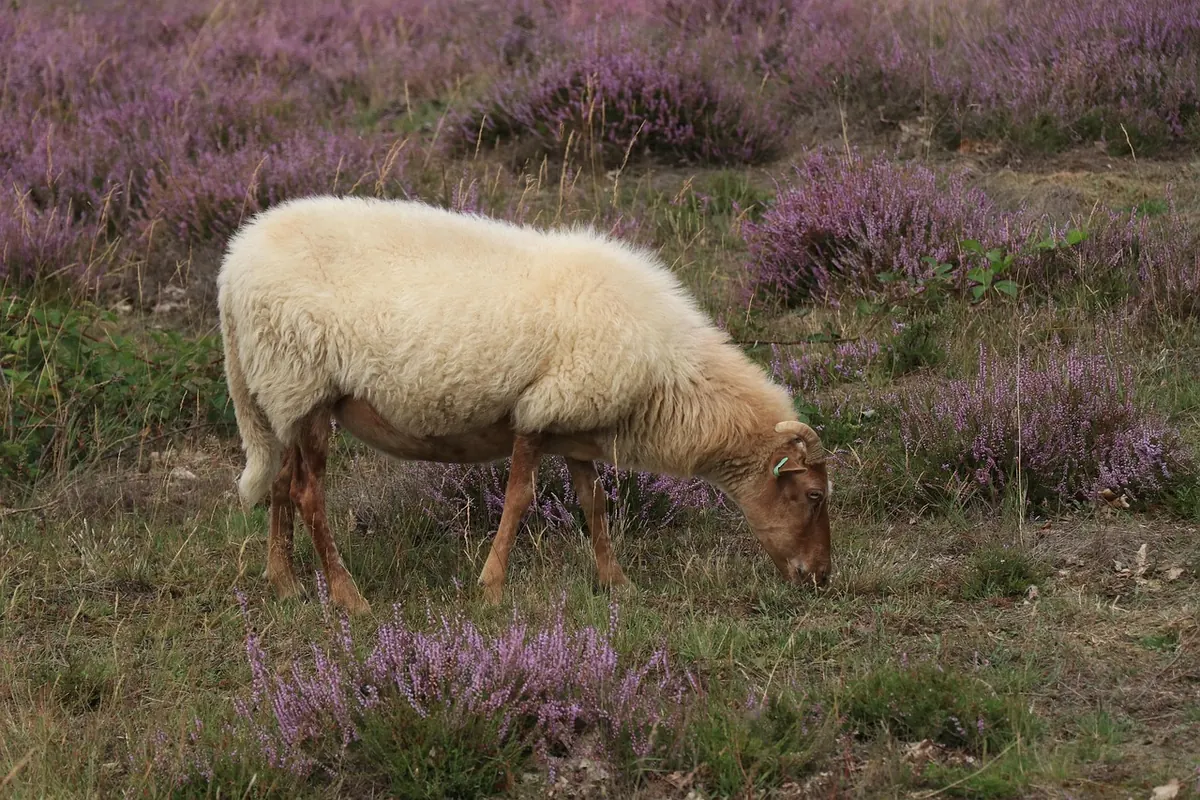
Sheep are nibblers. They take the soft tips of heather in winter and graze grasses close to the ground, which is why heavy sheep stocking turns a purple slope into a short, grey-green carpet. Cattle and hardy ponies work differently: they rip at coarse grasses the sheep leave behind, poach wet ground with their hooves, and open bare patches where heather seed can germinate. Their dung feeds insects, which feed birds.
Too many, too few
Both extremes are bad. Overgraze a moor and you lose the dwarf shrubs, the lichens and the insects that depend on them, then the peat itself starts to erode in gullies. Undergraze it and the moor goes rank: tussocks of purple moor-grass, spreading bracken, leggy heather with little new growth and fewer flowers. The skill is in timing and numbers rather than a fixed rule. A wet bog wants very few animals and mostly in summer; a dry heath can carry more. Fencing, gates, water and shepherding decide whether the plan on paper actually happens on the hill.
- Sheep — fine-scale grazing, useful for keeping grass in check.
- Cattle — heavier, break up rank growth and create bare ground.
- Ponies — graze coarse grasses hard, good on wet sites.
- Deer — often unmanaged, and easily overlooked when stocking is planned.
Burning: Muirburn and Its Critics
Rotational burning, called muirburn in Scotland, is the traditional way of resetting heather. The aim is a cool burn: a fast-moving flame that takes the old stems and leaves the moss, litter and peat beneath damp and intact. Done well and worked across a slope in strips, it produces a mosaic of young, middle-aged and old heather. Different species use different patches — young growth for grazing, taller stands for nesting cover.
Done badly, it is a different story. A hot burn in dry conditions can eat into the peat, kill the mosses and lichens, release stored carbon and leave a scar that takes decades to heal. Smoke, escaped fires and damage to archaeology are all real risks. Burning is only permitted within a set season outside the nesting period, and on protected sites it usually needs consent from the relevant conservation body. Rules differ across England, Scotland, Wales and Northern Ireland, and have tightened in recent years — particularly on deep peat and blanket bog, where burning is now generally discouraged or restricted. If you are planning burns, check the rules that apply where you are, and follow the current guidance rather than a habit passed down.
Cutting: The Quiet Alternative
Where fire is a bad idea — next to woodland or buildings, on deep peat, on sites too wet or too steep to burn safely — machines do the job instead. Flails and mowers take off heather or grass without scorching the ground, and cut material can be baled, raked off or burned in small piles well away from the standing vegetation.
Cutting has its own drawbacks. It is slower and costlier than burning, and the litter it leaves can smother the regrowth you were trying to encourage, which is why arisings are often removed. Timing matters: cutting during the nesting season destroys nests and young, so work is usually done in late summer and autumn. On grass-dominated ground, repeated late cuts gradually weaken purple moor-grass and give smaller plants a chance. Bracken is tackled the same way, cut twice while the fronds are still unfurling, though the underground rhizomes are stubborn and one season rarely settles it. Cutting is also a standard tool in peatland restoration, alongside ditch blocking and scrub removal.
Why the Argument Gets So Heated
Moorland sits at the meeting point of several public interests, and they do not always align. Burning on peat releases carbon, which sits awkwardly with climate targets. Grazing and drainage affect how quickly water runs off the hills — a live question for towns downstream. Cutting and burning both cost money that has to come from farming support, grouse shooting, conservation funding or some mixture of the three.
Supporters of managed burning point out that removing fuel in small, controlled strips makes catastrophic wildfires less likely. Critics reply that frequent burning dries and degrades peat, and that wet, revegetated ground is just as defensible. Both can be right, on different soils, at different altitudes, in different rainfall. That is the frustrating part: general prescriptions tend to fail. What works on a dry heath in the Peak District may be exactly wrong on a bog in the Flow Country. Sensible management usually means a written plan, a target species or habitat, and monitoring that is honest enough to change the plan.
Reading the Moor as You Walk
You do not need a management plan to see what is happening on a hillside. Look for these clues:
- Heather height. Uniform, cropped-short heather suggests heavy grazing; a patchwork of heights suggests rotation at work.
- Beneath the heather. Moss, lichen and seedlings mean a healthy base. A thick thatch of dead stems means it is overdue for something.
- Burn edges. Clean lines with fresh shoots are a sign of a controlled burn. Blackened hollows down into the peat are not.
- Cut material. Rows of dried litter, bales, or a mown strip beside the track mean a machine has been through.
- Stock and signs of it. Gates, fences, dung and bare trodden paths tell you how heavily the ground is being used.
- Wet ground. Sphagnum, cotton grass and pools are good news. Cracks and bare peat are not.
None of that tells you whether the management is right for the place — that depends on what the site is being managed for. But it tells you which questions to ask, and a moor is far more interesting once you can read the answers in it.
Photo: Marjonhorn / Pixabay
Related Articles